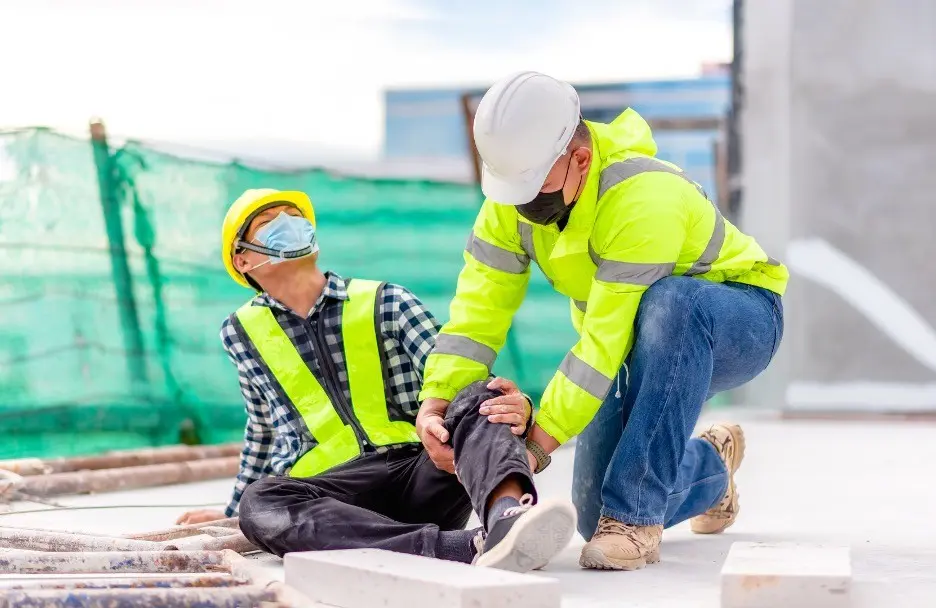
Construction sites are dangerous localities where numerous risks expose workers to danger. Whether it is working with heavy equipment or working at considerable heights, the risk of accidents is always high. Even in the face of continuing safety regulations, training, and safety measures, accidents at a construction site are still taking place at a rate that is alarming. Of all the hazards that may occur, the most widespread accident on a construction site is the fall. Falls always occupy the dominant position in terms of the number of injuries as well as fatalities in the industry, whether it is a case of falling off ladders, scaffolds, or roofs, as well as slip-offs or trip-offs of uneven surfaces.
Knowing the reasons why falls are so prevalent, the circumstances that lead people to falls, and the measures that can be employed to prevent falls is crucial when it comes to enhancing workplace safety and keeping construction employees safe.
When analyzing accident causes, accurate planning and budgeting also play a hidden but critical role. Many contractors now rely on construction cost estimating consultants to provide realistic estimates that account for labor, materials, and timelines. These estimates are not only important for financial planning but also for safety, as rushed schedules or poorly allocated resources often lead to unsafe shortcuts. By integrating cost and safety considerations early in a project, companies reduce risks that might otherwise contribute to fall-related incidents.
Why Falls Are the Most Common Accident
According to OSHA (Occupational Safety and Health Administration), falls are the top cause of death in construction, where they cause over 1/3 of all the deaths. There are some reasons why falls are the most common accident type:
On-the-Job Research Equipment: At construction sites, it is common to work at elevated heights, such as scaffolding, ladders, rooftops, or incomplete buildings. There is a high risk of falling in case there are no proper guardrails or harnesses.
Unstable Surfaces: Floors that are still under construction, wet surfaces, or even scaffoldings that are not built properly can cause slips and loss of balance.
Absence of Fall Protection Equipment: In other experiences, workers do not use fall protection equipment because of negligence, deficiency, or inaccessible equipment.
Human Error: Lack of concentration, fatigue, or the feeling of the need to meet deadlines can potentially cause unsafe practices that can be used as one of the key reasons for accidents.
Types of Fall-Related Accidents
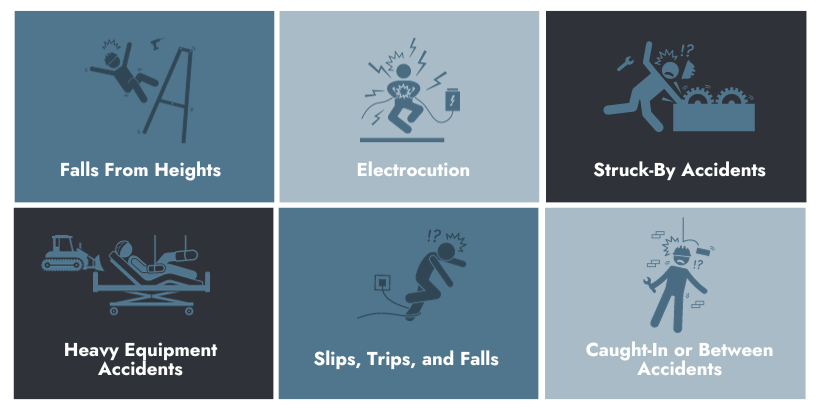
A fall may take place in a number of ways on a construction site. The most frequent are described as:
- Falls to a Lower Level: Employees falling to a lower level en route to a ladder/scaffold construction, rooftop, platform, or other elevated areas. These can be the most serious and result in serious injuries or death.
- Slip and Trip Falls: Slip or trip falls can occur due to uneven surfaces, spills, clutter, and various tools/extension cords.
- Falls into Openings: This could be falls into windows, holes, trenches, and elevator shafts due to the failure of workers to put an adequate barrier to cover them.
- Falls Through Weak Structures: Floors or unfinished floors, skylights, or roofs that are weak might collapse, with a person falling off them.
Other Common Construction Site Accidents
Though falls are the most typical of construction accidents, other injuries often happen on a construction site, such as:
- Struck-By Accidents: Strike someone with falling tools or equipment or with an on-the-move vehicle.
- Electrocutions: Contacting live wires, power tools, or ungrounded electricity.
- Caught-In/Between Accidents: The workers are caught between falling or collapsing heavy machinery, trench, and/or building materials.
- Machinery Accidents: Damages brought about by Lifts, Cranes, or the excavator through careless use.
These incidents have often been pooled together with falls listed as the Fatal Four by OSHA as being the most dangerous hazards in construction.
Consequences of Falls on Construction Sites
The effects of falls are varied and may include light trauma to life-threatening illnesses. The most is being injured with common injuries are:
- Fractures and fractures
- Traumatic brain and head injuries
- Damage to the Spinal cord
- Lenges (sic) and bruises
- Permanent incapacity or even death
In addition to the loss of life and the effects on the workers and their families, the accidents also translate to financial implications to the companies in terms of compensation claims, legal fines, an increase in insurance premiums, as well as delays.
How to Prevent Falls on Construction Sites
The reduction of falls needs a blend of appropriate planning, training of workers, and use of safety equipment. These are the main measures.
1. Fall Protection Systems
- Where there is work at heights, guardrails, safety nets, and personal fall arrest systems should be used.
- Make sure ladders and scaffolds are in proper, stable conditions before using them.
2. Constant Safety Training
- Train workers on how to identify and wear the protection gear.
- Conduct refresher courses to reinforce safe practices.
3. Site Management and Housekeeping
- Clear walkways of objects and tools, and power cords.
- Put up warning signs and barricades in a dangerous area.
4. Maintenance Proper Equipment
- Make regular checks on harnesses, ladders, scaffolds, and machinery.
- Replace damaged or worn-out equipment as soon as possible.
5. Planning and Communications
- Hold safety briefings and meetings each day.
- Incentivize employees to report any hazard or risk conditions.
Legal and Regulatory Compliance

In most countries, construction safety is very strictly regulated. Concerning the United States, OSHA has ordered employers to ensure that workers working at a height higher than six feet have fall protection. Failure to comply with them can lead to drastic punishment, which can be fines and halting of work activities.
The employers have a legal obligation to make sure there is a safe working environment. This encompasses providing protective gear, training, and well-defined safety guidelines. There is also a duty that rests on workers to adhere to safety regulations as well as put on protective equipment in a proper way.
Building a Culture of Safety
The best approach to lowering the issue of construction accidents would be implementing a safety-based culture on each construction site. This means:
- Ensuring the importance of safety at all levels of management.
- Empowering workers by allowing them to report an unsafe environment.
- Safe practices recognition and/or rewarding.
- Encouraging collective work.
By turning the culture of safety into a core workplace culture, the threat of these accidents especially falls is highly reduced.
Conclusion
So, what is the most common construction site accident?. Falls remain the most common cause of non-fatal and fatal accidents at the construction site due to heights and slips, or trips. Although other accidents, such as electrocutions and struck-by accidents, are perilous respectively, falls have been ranked as the most hazardous to the workers.
The positive side of the coin is that most accidents that happen during the fall can be prevented. By using proper safety measures, training, and equipment, construction companies will be able to keep their workers safe and decrease the number of risks, as well as create a more secure industry.
Employers and workers alike can realize this goal by acknowledging the risks and working to eliminate them, truly turning construction sites into zones of positive growth and not disaster.
FAQs
Why are falls the most common accident on construction sites?
The most common accident is falls, as construction sites are most of the time on elevated platforms such as scaffolds and ladders, and rooftops, among others. Defective protective equipment, unacceptable site conditions, or no training can lead to a higher risk.
How can construction companies prevent fall-related accidents?Prevention is best achieved through safe training and use of personal protective equipment (PPE), installation of guardrails, scaffolds, and tabling work areas. Frequent visitation to sites and ensuring adherence to safety prescriptions also remain important forces in the magnification of instances of falls.